Flagship · Records & Information Operations
Move from paper backlogs to controlled information operations.
Operational problem
Uncontrolled records are an operating and compliance risk.
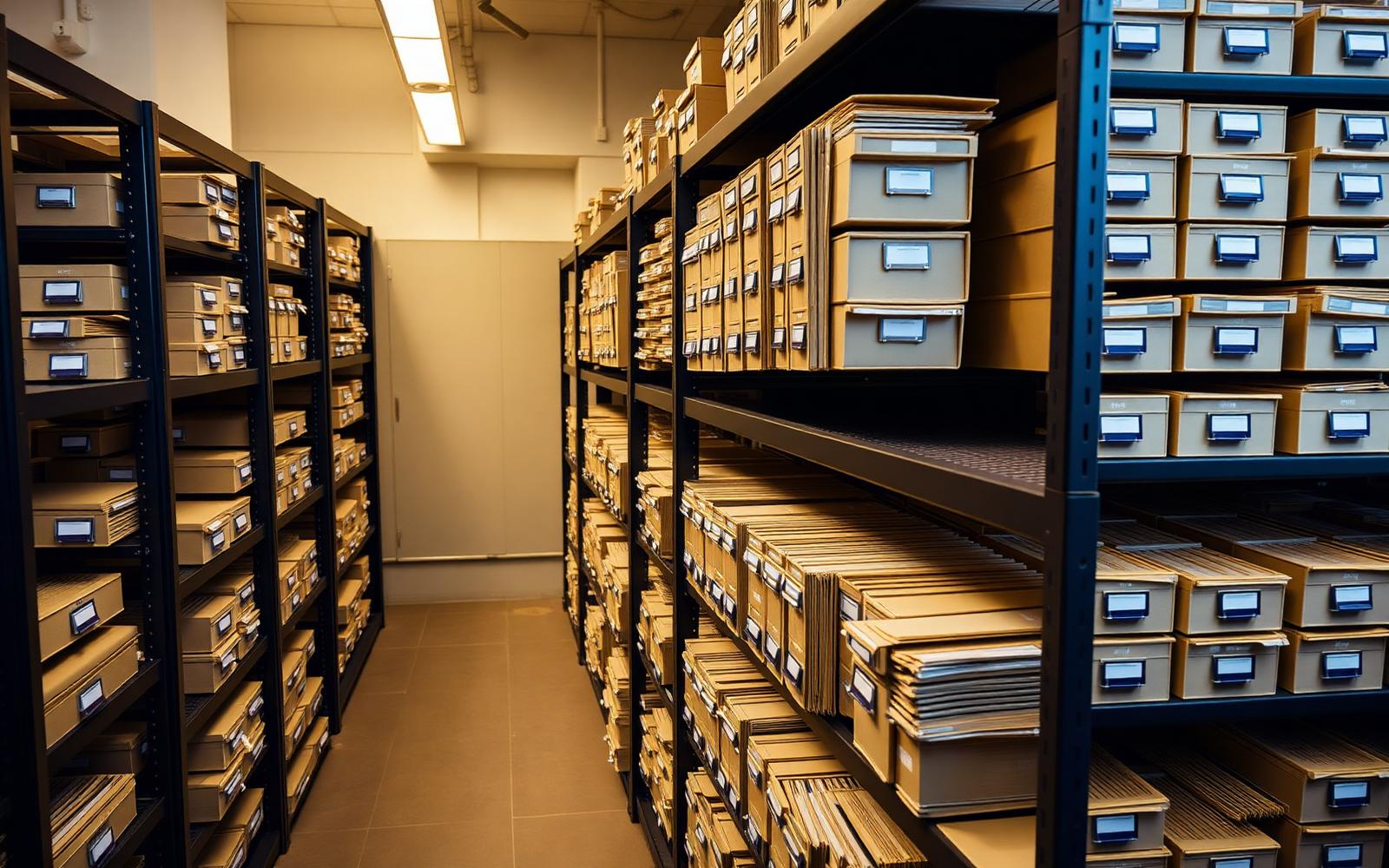
File rooms accumulate. Chain of custody breaks. Scanning stalls. Shredding is inconsistent. Retention decisions get deferred. The organization loses visibility into what it holds, where it lives, who touches it, and how it is destroyed.
Integrated capabilities
What the engagement can include.
Physical handling
- Records inventory
- File-room cleanouts
- Secure document pickup
- Secure transportation
- Records relocation
- Locked collection containers
Digitization support
- Document preparation
- Scanning coordination
- Data indexing
- Quality-control support
- Physical-to-digital transitions
- Records backlog reduction
Destruction & compliance
- Secure shredding
- Media destruction
- Certificates of destruction
- Chain-of-custody controls
- Retention & disposition support
- Project reporting
People & workflow
- Workflow automation
- Staff training
- SOP development
- Reporting dashboards
- Post-project handover
- Ongoing recurring support
Buyer outcomes
Results a buyer can point to.
- Outcome 01
Reduced records backlog
- Outcome 02
Lower information-security risk
- Outcome 03
Faster access to records
- Outcome 04
Defensible chain of custody
- Outcome 05
Controlled document destruction
- Outcome 06
Better compliance documentation
- Outcome 07
Reduced dependence on paper
- Outcome 08
More organized information workflows
Message to the buyer
Control the complete records lifecycle — from file-room inventory and secure transportation to digital transition and documented destruction.
Final call to action
Bring Us the Scope. We'll Organize the Execution.
Whether it is a records transition, office relocation, funded program, property portfolio, subcontract requirement, or multi-service operational challenge — we'll evaluate the scope and design the path to execution.